Kinosian Lab
Montana State University

Plant Evolution and Systematics
Our lab works on how land plants have evolved from the level of landscapes to genomes.
Chromosome number evolution
Our work aims to understand patterns and mechanisms of chromosome number evolution in multiple groups of land plants, including ferns, lycophytes, and legumes. These projects use a combination cytology and comparative genomics.
Non-Mendelian inheritance in ferns and lycophytes
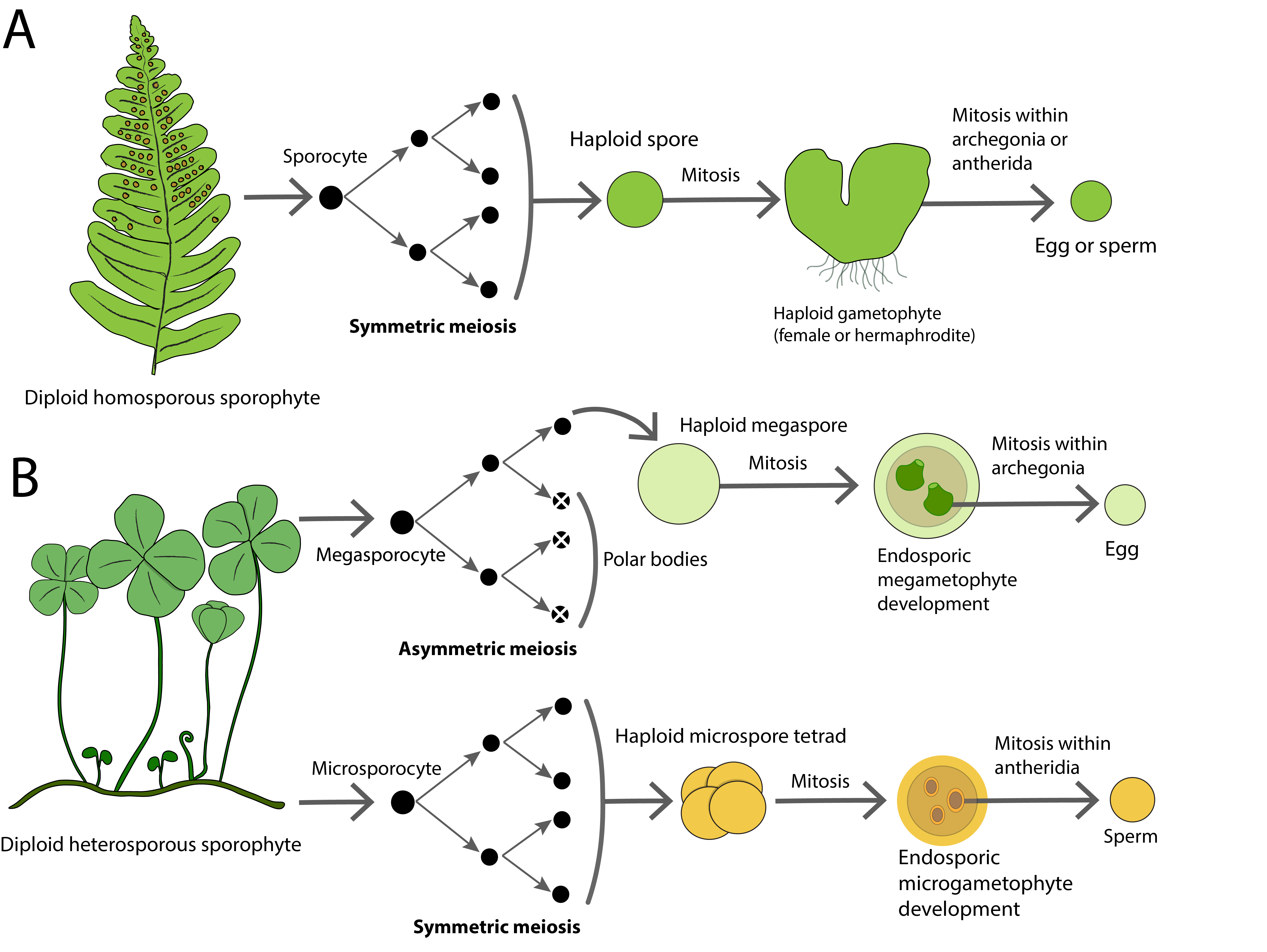
The symmetry of meiosis is an important genome trait because asymmetric meiosis enables meiotic drive and associated genomic changes, while symmetric meiosis cannot lead to meiotic drive. Meiotic drive is a deviation from Mendelian inheritance where genetic elements are preferentially inherited by the surviving egg cell, and can profoundly impact chromosome (and genome) size, structure, and number. In most heterosporous plants, meiosis during megasporogenesis is asymmetric, meaning one of the four meiotic products survives to become the egg. Comparatively, meiosis is symmetric in homosporous megasporogenesis and all meiotic products survive. We are working to understand how meiotic drive may be influencing genome structure, specifically chromosome number and genome size, in heterosporous plants, and how its absence may have lead to the extreme genome sizes and chromosome numbers of homosporous ferns and lycophytes.
Systematics and evolution of the model fern Ceratopteris
The fern Ceratopteris richardii has been studied as a model organism for over 50 years because it is easy to grow and has a short life cycle. In particular, as the first homosporous vascular plant for which genomic resources were developed, C. richardii has been an important system for studying plant evolution. However, we know relatively little about the natural history or systematics of C. richardii. Some of our work has focused on the species relationships within the genus, cryptic species, and hybrid taxa.